13 Feb - 31 Dec 2026
Alt

Goodman Gallery is pleased to collaborate with the Mount Nelson, A Belmond Hotel, in hosting a year-long outdoor sculpture exhibition across the hotel’s historic gardens. Bringing together works by Yinka Shonibare, Ghada Amer, William Kentridge, and Walter Oltmann, the project invites visitors to encounter contemporary sculpture through movement, proximity, and discovery.

Conceived as a walk-through experience, the exhibition unfolds across the landscape, encouraging moments of pause, reflection, and return as art and environment intersect.

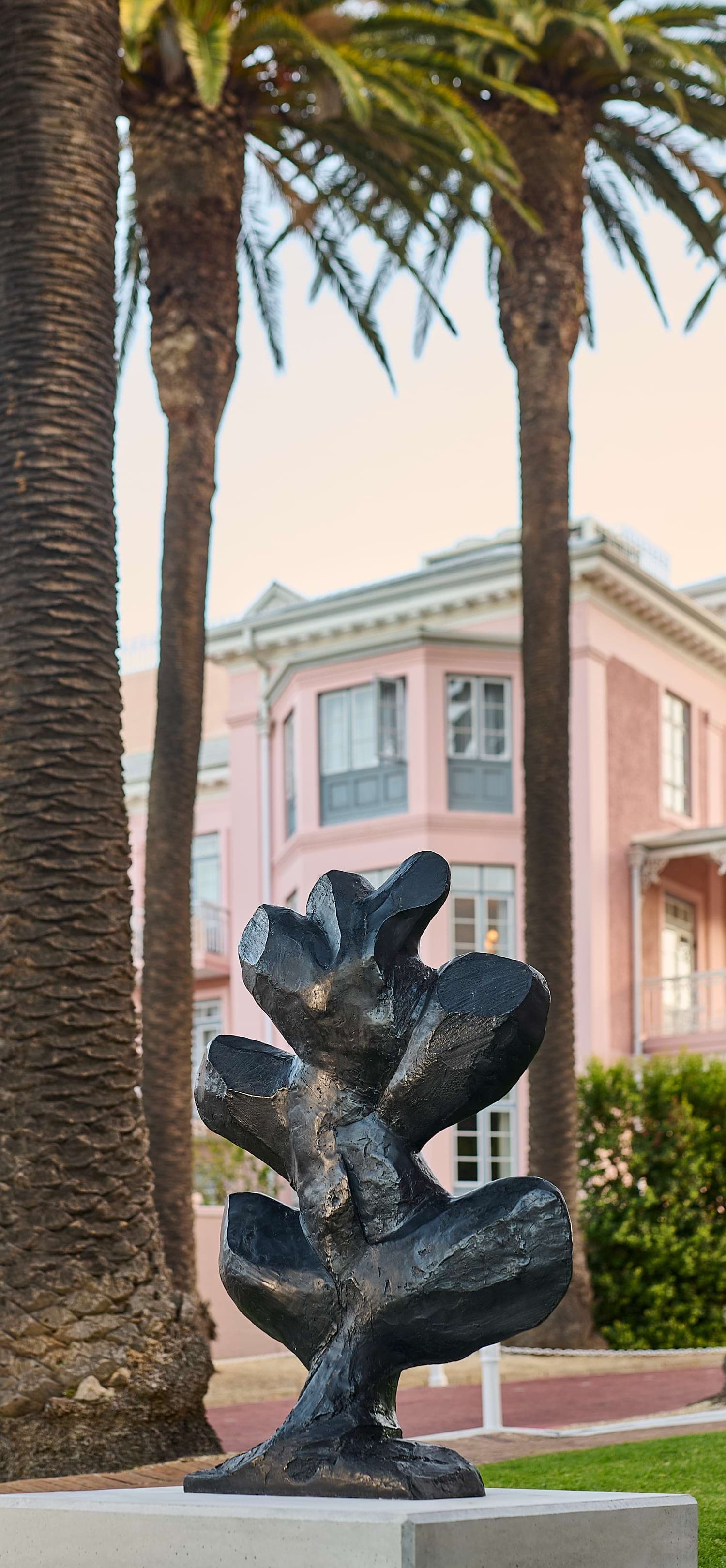
Yinka Shonibare’s Fabric Bronze II captures a moment of wind made solid. A hand-painted Dutch-wax pattern sweeps across a bronze form that appears to billow mid-gust, holding motion and stillness in productive tension. The work draws together references to colonial histories, global trade, and identity, while its theatrical dynamism activates the surrounding garden as a stage on which history, movement, and material converge.

Yinka Shonibare’s Fabric Bronze II captures a moment of wind made solid. A hand-painted Dutch-wax pattern sweeps across a bronze form that appears to billow mid-gust, holding motion and stillness in productive tension. The work draws together references to colonial histories, global trade, and identity, while its theatrical dynamism activates the surrounding garden as a stage on which history, movement, and material converge.
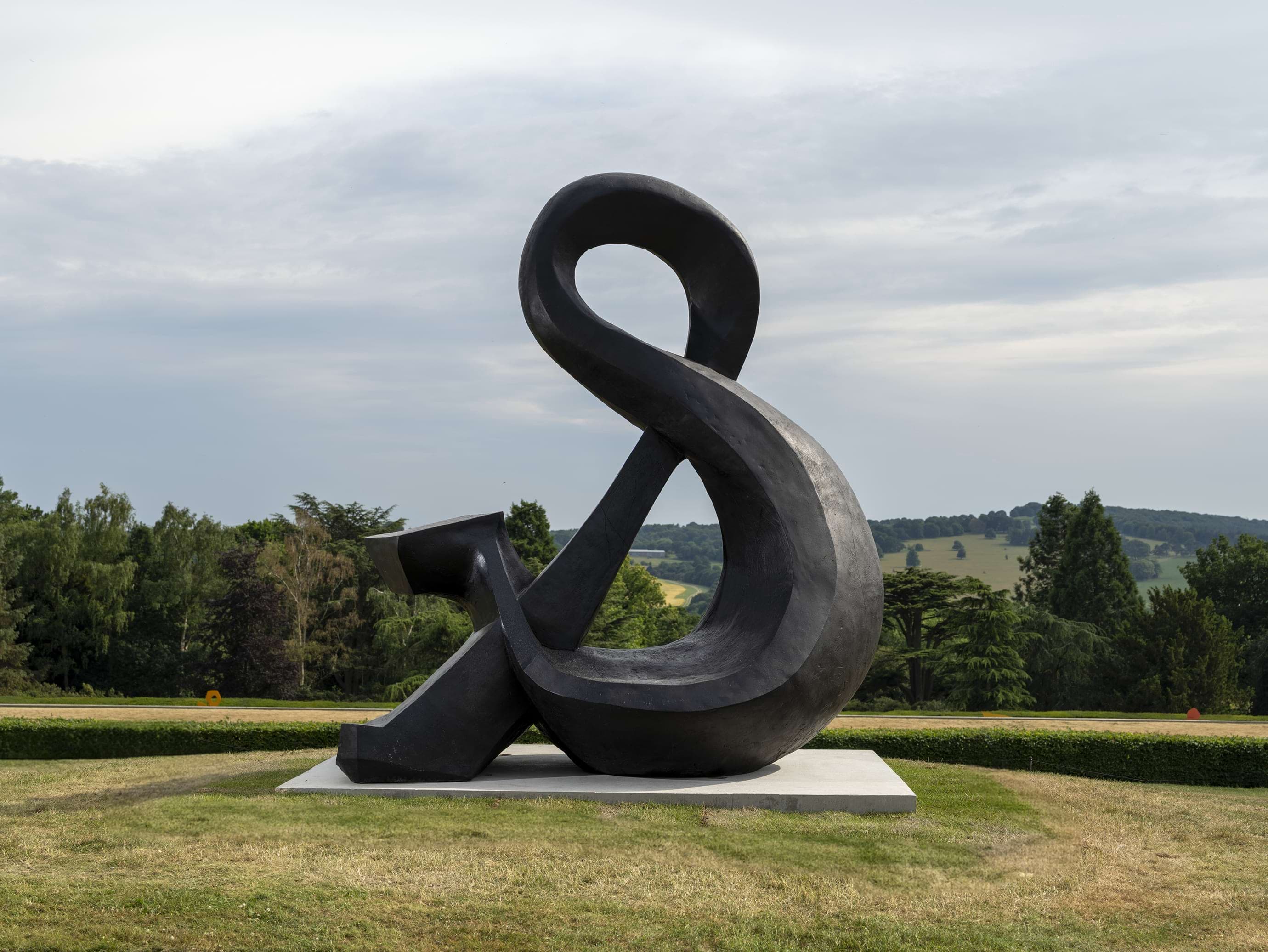
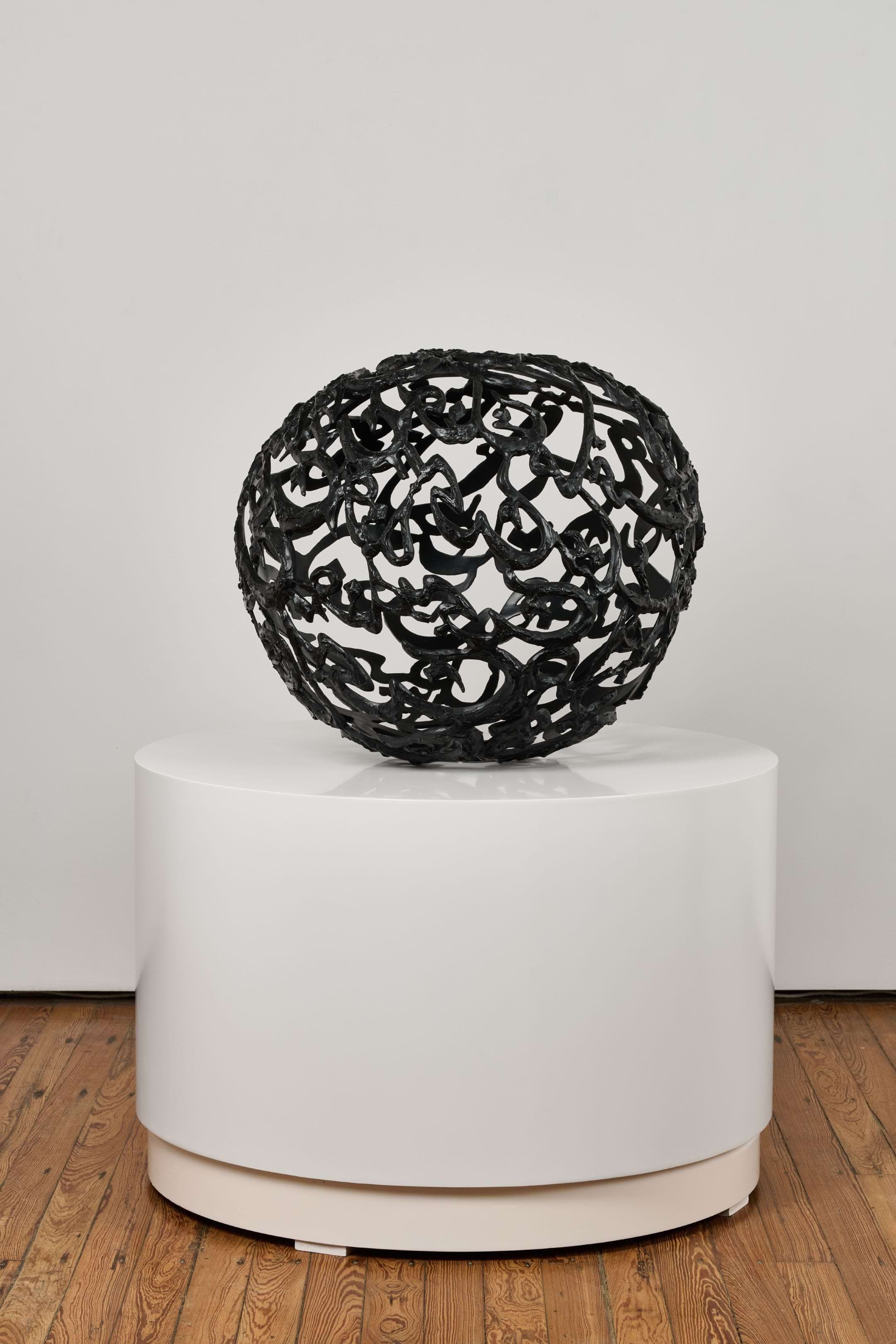
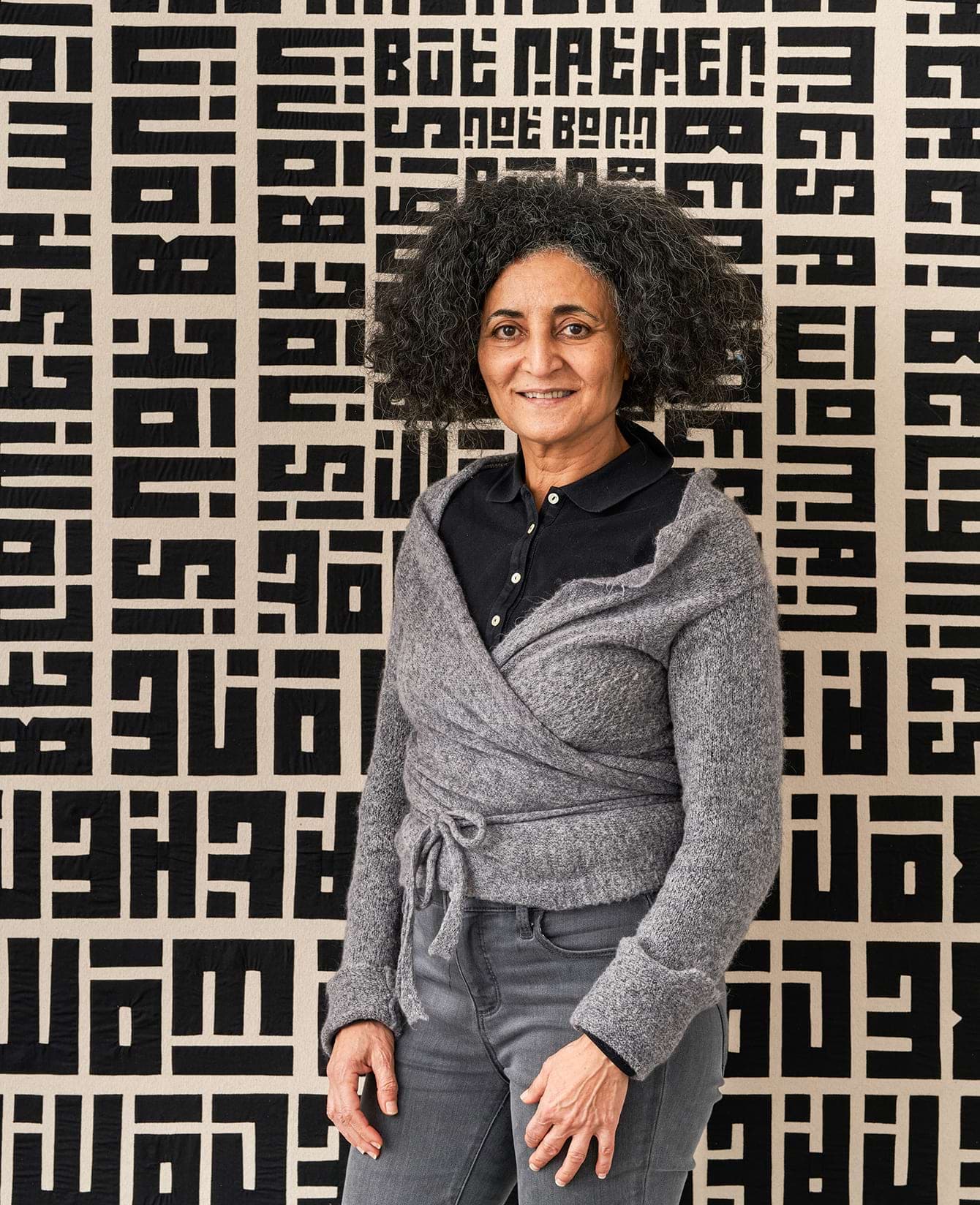
Ghada Amer’s sculptural works extend her longstanding engagement with language, desire, and abstraction. What You Seek translates a Rumi phrase into a spherical lattice of interwoven Arabic letters, inviting viewers to encounter shifting meanings as they move around the work. Thought gathers into language, and language becomes structure. In Mexican Thoughts in White (2025) – a bronze sculpture coated in white automotive paint and volcanic stone – Amer further experiments with material and form, pushing her sculptural practice toward abstraction while retaining its conceptual grounding in transformation and inner reflection.

Ghada Amer’s sculptural works extend her longstanding engagement with language, desire, and abstraction. What You Seek translates a Rumi phrase into a spherical lattice of interwoven Arabic letters, inviting viewers to encounter shifting meanings as they move around the work. Thought gathers into language, and language becomes structure. In Mexican Thoughts in White (2025) – a bronze sculpture coated in white automotive paint and volcanic stone – Amer further experiments with material and form, pushing her sculptural practice toward abstraction while retaining its conceptual grounding in transformation and inner reflection.
Ghada Amer’s sculptural works extend her longstanding engagement with language, desire, and abstraction. What You Seek translates a Rumi phrase into a spherical lattice of interwoven Arabic letters, inviting viewers to encounter shifting meanings as they move around the work. Thought gathers into language, and language becomes structure. In Mexican Thoughts in White (2025) – a bronze sculpture coated in white automotive paint and volcanic stone – Amer further experiments with material and form, pushing her sculptural practice toward abstraction while retaining its conceptual grounding in transformation and inner reflection.
Alt
Ghada Amer
What You Seek , 2023
Ghada Amer’s sculptural works extend her longstanding engagement with language, desire, and abstraction. What You Seek translates a Rumi phrase into a spherical lattice of interwoven Arabic letters, inviting viewers to encounter shifting meanings as they move around the work. Thought gathers into language, and language becomes structure. In Mexican Thoughts in White (2025) – a bronze sculpture coated in white automotive paint and volcanic stone – Amer further experiments with material and form, pushing her sculptural practice toward abstraction while retaining its conceptual grounding in transformation and inner reflection. Ghada Amer’s sculptural works extend her longstanding engagement with language, desire, and abstraction. What You Seek translates a Rumi phrase into a spherical lattice of interwoven Arabic letters, inviting viewers to encounter shifting meanings as they move around the work. Thought gathers into language, and language becomes structure. In Mexican Thoughts in White (2025) – a bronze sculpture coated in white automotive paint and volcanic stone – Amer further experiments with material and form, pushing her sculptural practice toward abstraction while retaining its conceptual grounding in transformation and inner reflection.

Walter Oltmann’s Carpobrotus (2026) takes its inspiration from Carpobrotus acinaciformis, an indigenous succulent groundcover found in the coastal fynbos of the Western Cape. Known for its resilience, medicinal uses, and vivid pink flowers, the plant is reimagined here at an enlarged scale. Woven from anodised aluminium wire in pink, gold, and silver, the sculpture celebrates regional biodiversity while translating organic growth into a carefully constructed, luminous form. Its structure allows light, air, and shadow to pass through, establishing a responsive relationship to its surroundings and a surprise encounter for visitors within the fountain garden.

Walter Oltmann’s Carpobrotus (2026) takes its inspiration from Carpobrotus acinaciformis, an indigenous succulent groundcover found in the coastal fynbos of the Western Cape. Known for its resilience, medicinal uses, and vivid pink flowers, the plant is reimagined here at an enlarged scale. Woven from anodised aluminium wire in pink, gold, and silver, the sculpture celebrates regional biodiversity while translating organic growth into a carefully constructed, luminous form. Its structure allows light, air, and shadow to pass through, establishing a responsive relationship to its surroundings and a surprise encounter for visitors within the fountain garden.
Woven from anodised aluminium wire in pink, gold, and silver, the sculpture celebrates regional biodiversity while translating organic growth into a carefully constructed, luminous form.
Walter Oltmann’s Carpobrotus (2026) takes its inspiration from Carpobrotus acinaciformis, an indigenous succulent groundcover found in the coastal fynbos of the Western Cape. Known for its resilience, medicinal uses, and vivid pink flowers, the plant is reimagined here at an enlarged scale. Woven from anodised aluminium wire in pink, gold, and silver, the sculpture celebrates regional biodiversity while translating organic growth into a carefully constructed, luminous form. Its structure allows light, air, and shadow to pass through, establishing a responsive relationship to its surroundings and a surprise encounter for visitors within the fountain garden.

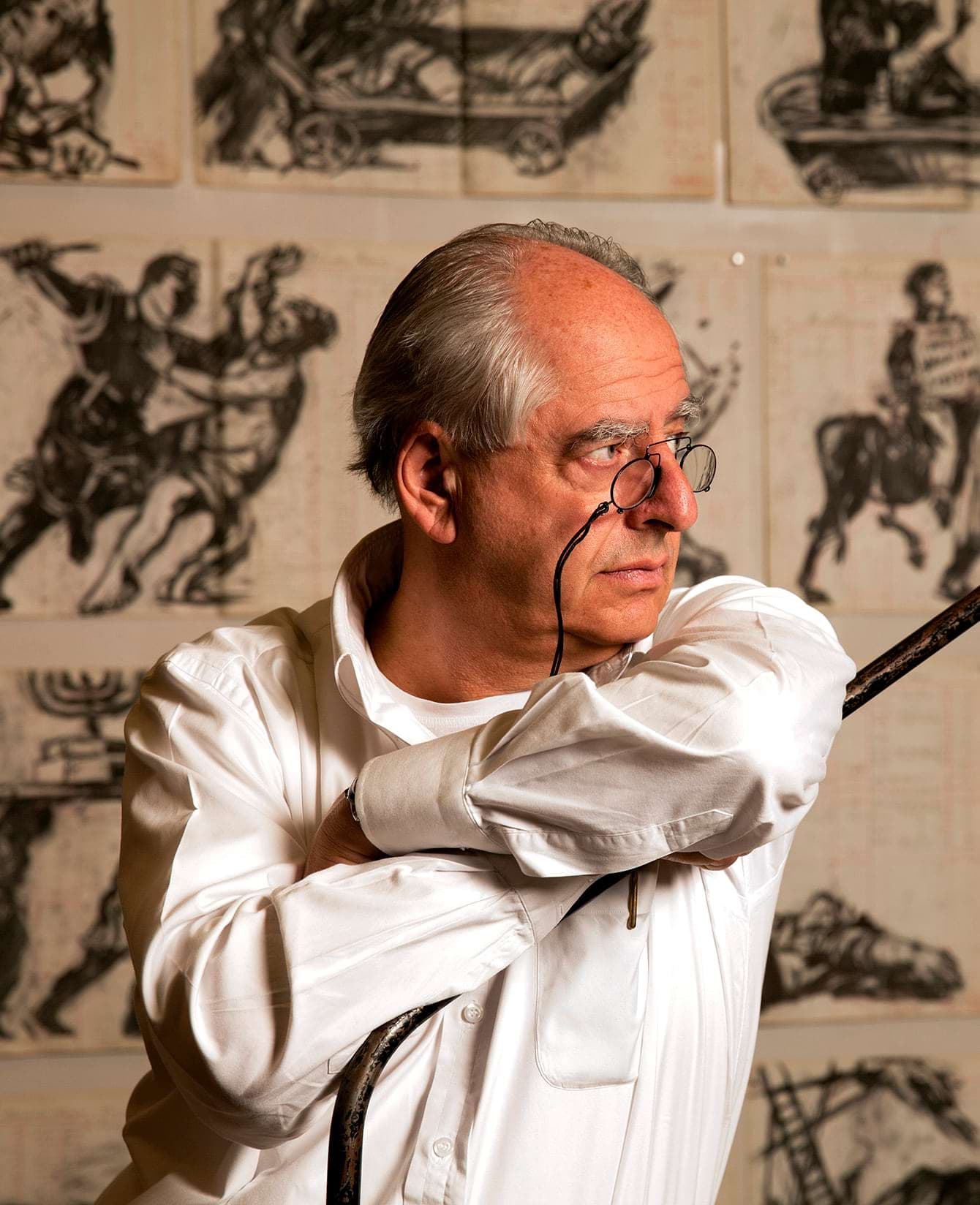
Over the past two decades, sculpture has become an increasingly central component of William Kentridge’s practice, translating drawing into three dimensions and evolving from his work in animation, theatre, and film. The bronzes presented here – Branch (2021), Stroke (2022), and and further along the route, Cape Silver (2018) – explore the reciprocal relationship between line and mass, positive and negative space, light and shadow. Depicting familiar objects from domestic life alongside animals and plant forms – a branch, a stretching cat, a jug – these works echo recurring motifs in Kentridge’s visual language. Their dark patina, recalling both ink and shadow, emphasises weight and presence, underscoring sculpture as a process of giving physical substance to thought and image.

Over the past two decades, sculpture has become an increasingly central component of William Kentridge’s practice, translating drawing into three dimensions and evolving from his work in animation, theatre, and film. The bronzes presented here – Branch (2021), Stroke (2022), and and further along the route, Cape Silver (2018) – explore the reciprocal relationship between line and mass, positive and negative space, light and shadow. Depicting familiar objects from domestic life alongside animals and plant forms – a branch, a stretching cat, a jug – these works echo recurring motifs in Kentridge’s visual language. Their dark patina, recalling both ink and shadow, emphasises weight and presence, underscoring sculpture as a process of giving physical substance to thought and image.

Together, these four sculptural artists’ practices articulate distinct yet intersecting approaches to history, language, ecology, and form. Experienced through walking, lingering, and repeated encounter, the exhibition foregrounds a dialogue between sculpture, landscape, and movement, offering visitors a way of seeing that unfolds over time and through the act of looking.

Together, these four sculptural artists’ practices articulate distinct yet intersecting approaches to history, language, ecology, and form. Experienced through walking, lingering, and repeated encounter, the exhibition foregrounds a dialogue between sculpture, landscape, and movement, offering visitors a way of seeing that unfolds over time and through the act of looking.
Artists

Yinka Shonibare
Ghada Amer
Walter Oltmann
William Kentridge

Other Exhibitions

See All